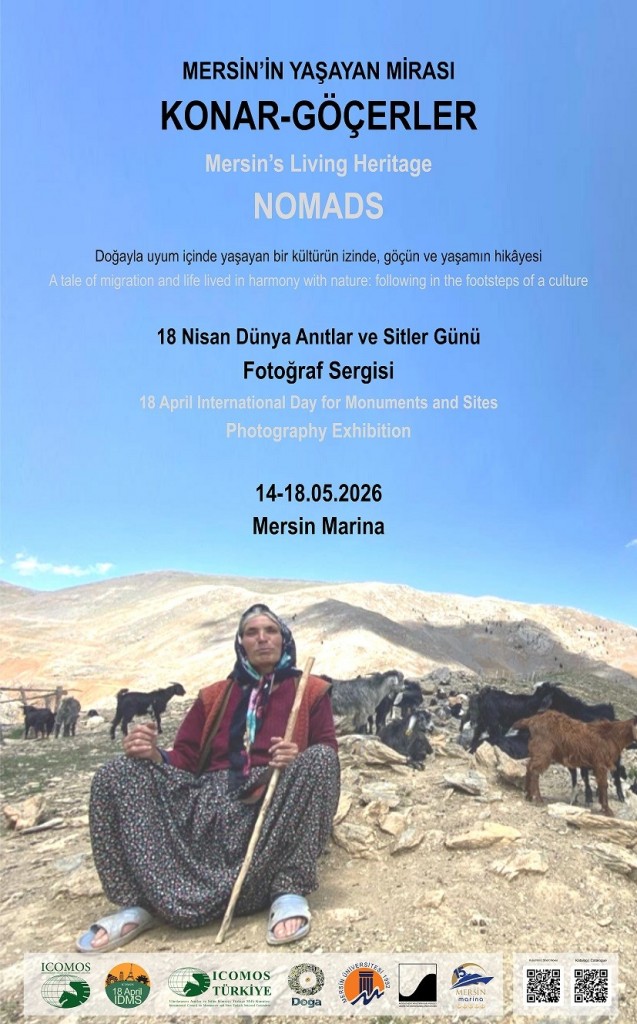
International Day for Monuments and Sites 2026: Mersin's Living Heritage Nomads
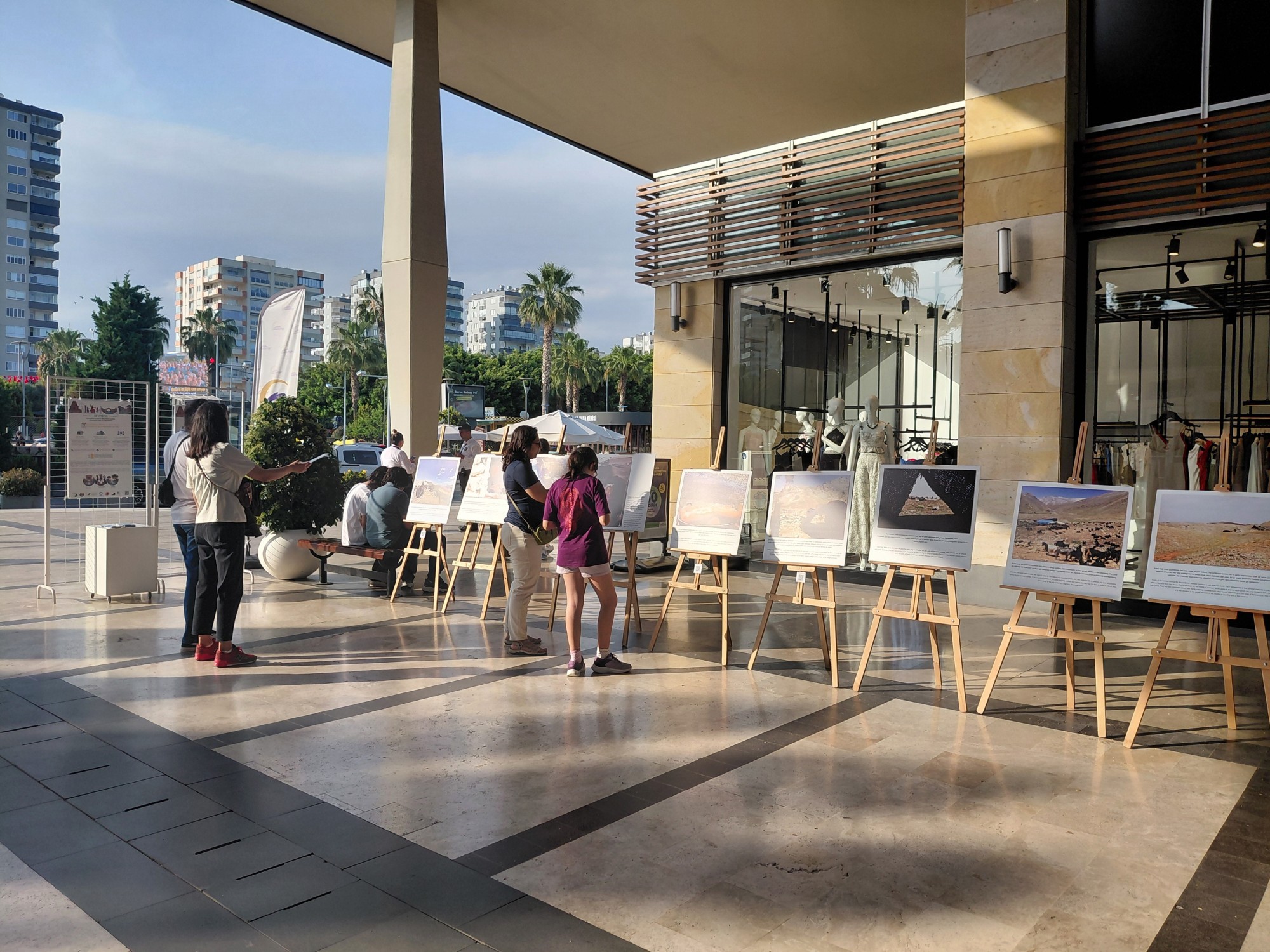
The photography exhibition ‘Mersin’s Living Heritage: Nomads’, organised in collaboration between the Mersin University Centre for Mediterranean Urban Studies and the Nature Association, and hosted by Mersin Marina, was open to visitors from 14 to 18 May 2026. The exhibition was organised under the theme “Emergency Intervention for Living Heritage in the Context of Conflicts and Disasters”, designated by ICOMOS for the 2026 International Day for Monuments and Sites (IDMS).
The exhibition aims to highlight the nomadic way of life that has persisted for centuries in the Mersin and Taurus regions and to draw attention to the living heritage nature of this culture. The nomadic way of life, based on seasonal movements between the Mediterranean coast and the highlands of the Taurus Mountains, is one of the region’s significant cultural values, characterised by production practices in harmony with nature, the summer-winter settlement cycle, traditional knowledge systems, the culture of daily life, and experiences passed down from generation to generation. Through the photographs featured in the exhibition, the spatial, cultural and social dimensions of this life on the move are conveyed to visitors, whilst emphasising that the relationship the nomadic communities have forged with the Taurus Mountains is an integral part of the cultural landscape.
The photographs, taken by Turan Çetin, Mersin Regional Coordinator for the Nature Association, draw on a visual archive built up over many years of fieldwork carried out by the Nature Association and the relationships established with nomadic communities. Çetin’s experience, particularly in nature conservation and collaboration projects with nomadic communities carried out in Mersin, reinforces the exhibition’s documentary nature whilst demonstrating that nomadic life is not merely a cultural element of the past, but a living heritage that continues to exist today.
In line with ICOMOS’s approach, which assesses cultural heritage in terms of both its tangible and intangible dimensions and emphasises the importance of the harmony between nature and humankind, the exhibition has emerged as a significant awareness-raising initiative that makes the concept of living heritage visible at a local level. When assessed within the framework of UNESCO’s understanding of living heritage—which encompasses oral traditions, social practices, knowledge and practices concerning nature and the universe, as well as artisanal skills—the necessity of preserving the nomadic culture in Mersin and passing it on to future generations has once again been brought to the fore.
The exhibition, held at Mersin Marina, attracted considerable interest from visitors as a meaningful event that served as a reminder that cultural heritage is not limited solely to monuments and historic buildings, but also endures through ways of life, traditional knowledge systems and the relationship between humans and nature. The exhibition also contributed to raising awareness of the preservation of living heritage by sharing Mersin’s cultural diversity and the unique ways of life shaped by the Taurus Mountains with the public.
Exhibition catalogue (both in Turkish and English)
Short video (English subtitle)
Photo Gallery