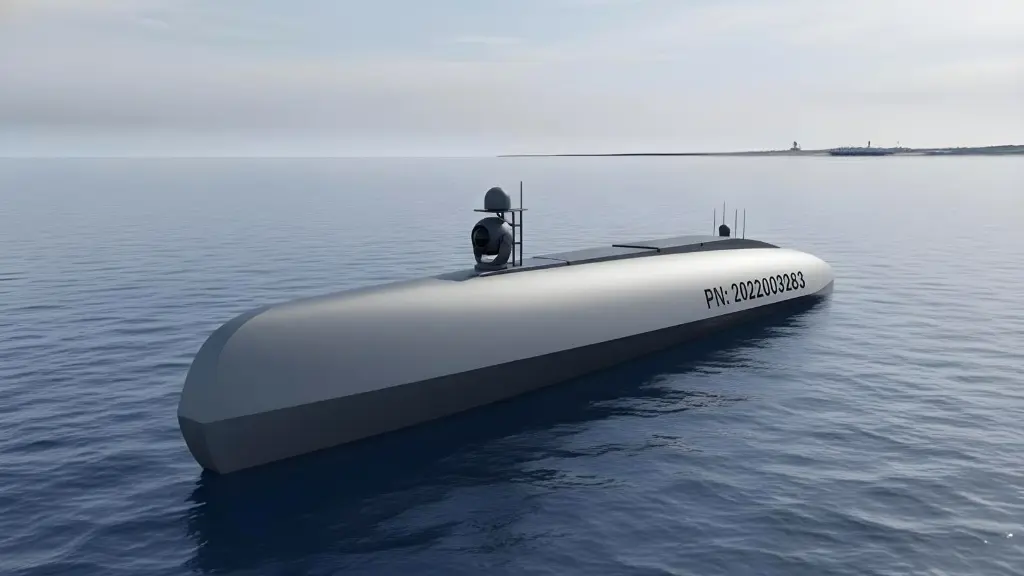
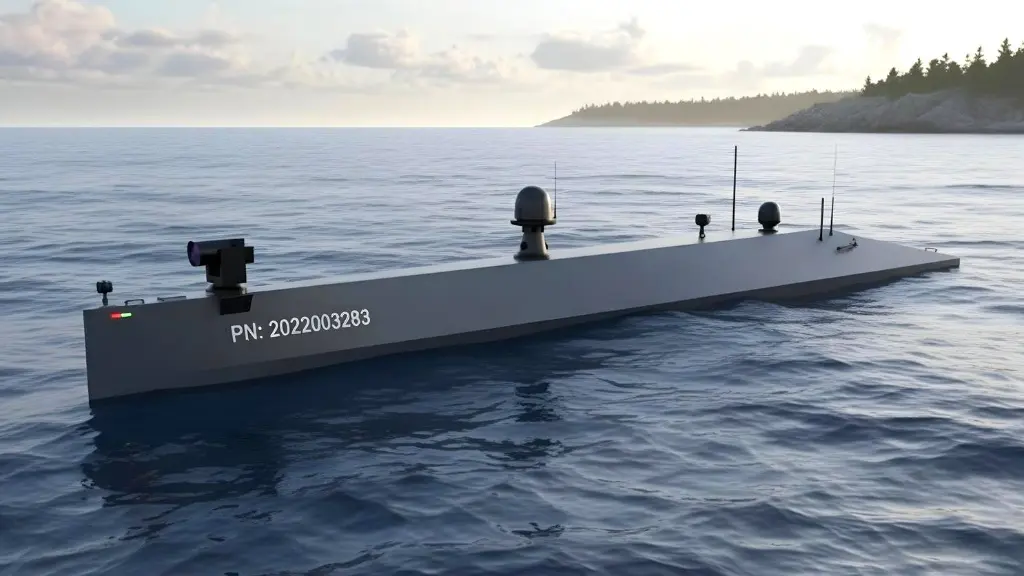
Our Dean, Prof. Dr. Caner Özdemir, will design an Artificial Intelligence-based 'Ghost Unmanned Sea Vehicle' with the support of TÜBİTAK.
Developed through a multidisciplinary approach, the project will be jointly conducted by Piri Reis University and İzmir Kâtip Çelebi Uni.
Project Information
- Project Investigator
- Professor Caner Özdemir
- Funding
- TUBITAK
- Publication Link
- doi_lnik
- Status
- Ongoing
- Research Areas
- researchseevehicle
Our University is launching another significant R&D project that will contribute to our country’s defense industry and maritime technologies. The project, led by Prof. Dr. Caner Özdemir, Dean of Research and Head of the Department of Telecommunications at the Faculty of Engineering, Electrical and Electronics Engineering, is entitled “Artificial Intelligence-Supported Integrated Optimization of Electromagnetics and Fluid Dynamics for the Design of Low Radar Cross-Section Marine Vehicles.” It has been awarded support under TÜBİTAK’s 1001 – Scientific and Technological Research Projects Funding Program. Through this project, unmanned sea vehicles with low radar visibility and high maneuverability will be designed using artificial intelligence algorithms.
Prepared with a multidisciplinary approach, the project will be carried out in collaboration with Piri Reis University and İzmir Kâtip Çelebi University. It aims to develop indigenous and national unmanned marine vehicle designs with stealth features and superior hydrodynamic performance.
First Scientific and Industrial Application of a Patented Technology
Prof. Dr. Caner Özdemir explained that the foundation of the project lies in the patent “A Body with Reduced Radar Visibility,” registered by the Turkish Patent and Trademark Office in 2025. He emphasized that, unlike traditional ship design processes where electromagnetic wave scattering and fluid dynamics are studied separately, this project will integrate both domains. “We will couple electromagnetic scattering analysis with fluid dynamics simulations in a way that they feed into each other. By managing the interaction between these two fields with AI-based optimization algorithms, we will develop an optimal marine vehicle design methodology. This will allow us to reduce radar visibility while maintaining critical maritime performance such as stability, hydrodynamic resistance, and maneuverability,” he stated.
Pioneering Designs for Unmanned Reconnaissance and Kamikaze Vessels
Highlighting the defense industry outcomes, Prof. Dr. Özdemir noted: “As project outputs, we aim to develop two prototype designs: a 12–13 meter unmanned reconnaissance-observation vessel and a 6–7 meter unmanned kamikaze vessel. In addition, we will produce models suitable for technology transfer to the defense industry, contributing to domestic software infrastructure and design methodology.”
Acknowledgment to Rector Prof. Dr. Erol Yaşar
Prof. Dr. Özdemir expressed gratitude to his colleagues from Mersin University, Piri Reis University, and İzmir Kâtip Çelebi University, as well as to TÜBİTAK for their support. He also extended special thanks to Mersin University Rector Prof. Dr. Erol Yaşar for providing opportunities and encouragement throughout the project.
Strong Academic Collaboration
In the project, our University will focus on radar cross-section simulations and AI optimization, while Piri Reis University and İzmir Kâtip Çelebi University will manage computational fluid dynamics processes. The project team includes Prof. Dr. Zeki Yetkin from our Department of Computer Engineering, Prof. Dr. Ahmet Taşdemir from Piri Reis University Faculty of Maritime Studies, and Dr. Mehmet Akman and Dr. Sertaç Bulut from İzmir Kâtip Çelebi University Faculty of Shipbuilding and Maritime Studies. Additionally, four graduate scholarship holders will be employed, contributing to the training of young researchers.
Photo Gallery